转自calgary herald
Oilpatch on alert over terror threat
Online posting also threatens Venezuela, Mexico
Article Tools
Printer friendly
E-mail
Font: * * * * Ian MacLeod, Ottawa Citizen, CanWest News Service and Calgary Herald
Published: Wednesday, February 14, 2007
Alberta's energy sector is on heightened alert after an al-Qaeda Internet posting called for terrorist strikes against Canadian oil and natural gas facilities to "choke the U.S. economy."
An online message, posted last Thursday by the al-Qaeda Organization in the Arabian Peninsula, declares "we should strike petroleum interests in all areas which supply the United States . . . like Canada," the largest exporter of oil and gas to the U.S.
"The biggest party hurt will be the industrial nations, and on top of them, the United States."
The Canadian Security Intelligence Service said Tuesday it was aware of the posting, as is Public Safety and Emergency Preparedness Canada.
"Do we think it's a serious threat? I can't get into that," said CSIS spokeswoman Barbara Campion.
Alberta Energy and Utilities Board spokesman Darin Barter said oil and gas companies are on "heightened alert," but added the warning wasn't specific enough to warrant raising the threat level.
"There was no evidence that pointed to any imminent or direct threat to Alberta infrastructure," he said.
Although it declines to list specific sites, Alberta has designated some oilsands mines, power plants, refineries and pipelines among "critical infrastructure" as potential terrorist targets.
The threat comes from the same terrorist group, the Saudi arm of Osama bin Laden's network, that claimed responsibility for last February's attack on the world's largest oil processing facility at Abqaiq in Saudi Arabia's eastern province.
The attack was foiled when guards at the site opened fire on the terrorists, blowing up their vehicles filled with explosives before they could get through the gates.
The message is contained in Sawt al-Jihad (Voice of Jihad), the group's online magazine and was translated from Arabic by the SITE Institute, a non-profit U.S. group that monitors terrorist websites.
Three western countries are mentioned in the call-to-arms -- Canada first, followed by Mexico and Venezuela. Would-be attackers are instructed to specifically target oilfields, pipelines, loading platFORMs and carriers.
Greg Stringham, vice-president of the Canadian Association of Petroleum Producers, said the threat is similar to a posting made about a year ago, when an al-Qaeda-affiliated Internet blog called on Canadian and U.S. jihadists to attack an Alaskan oil pipeline.
"We are taking it very seriously and making sure that people are aware and vigilant even, though we've been told there is no new threat or additional threat at this point in time," he said, "but every time Canada gets mentioned in this, it really does make sure that we are well-prepared."
Premier Ed Stelmach said Tuesday he was not aware of the most recent threat, but said the province is working closely with federal and U.S. governments to share inFORMation on terrorism threats and create "the most modern tracking system" to monitor energy infrastructure in Alberta.
"I didn't know that Osama bin Laden knows where I am, but infrastructure is critical and that's where we'll be protecting it," Stelmach told the Herald on Tuesday.
Experts have long considered the U.S. dependence on foreign oil -- and al-Qaeda's evolving strategy to thwart U.S. access to its major oil suppliers -- as the country's Achilles heel.
A major supply disruption would send energy prices soaring. Had the Abqaiq attack been successful, some experts say oil prices would've likely broken all records, sending shocks through the global economy.
"We should strike petroleum interests in all areas which supply the United States, and not only in the Middle East, because the target is to stop its imports or decrease it by all means," says the article.
Tom Quiggan, a senior fellow at the Center of Excellence for National Security at Singapore's Nanyang Technological University, said it is important not to misread the possible intention of the threat.
"We should not be overly concerned at this exact moment," he said. "Al-Qaeda as an organization has been severely weakened."
The posting appears to be "intended to send a message to its followers that they should consider a wider set of targets that just those in the Middle East," he said.
It also is "an operational suggestion to the 'homegrown jihadists and independent groups that follow the inspiration message of al-Qaeda. To them, it outlines a suggested list of potential new targets. Canada is at the top of that list."
Since 2000, he said, Canada's proven oil reserves have risen from about five billion barrels of oil to more than 180 billion barrels. That puts Canada in the No. 2 position as an oil reserve country, second only to Saudi Arabia and significantly ahead of other states such as Iraq, Kuwait or Iran.
"Sawt al-Jihad has correctly analyzed the oil importing situation of the United States and concluded that it is not just Middle Eastern suppliers that are important," he said.
Martin Rudner, director of Carleton University's Canadian Centre of Intelligence and Security Studies, said a successful attack against Canadian supplies and resulting disruption of American energy imports would also inflict a major symbolic wound against North America.
He said al-Qaeda in the Arabian Peninsula are "a bunch of guys with capability and intent. I would ramp up my awareness, all the kinds of things which intelligence and law enforcement agencies are supposed to do."
Since the Sawt al-Jihad article contains some operational details of the 2006 Abqaiq attack, Rudner said he believes it's intended as a call-to-arms rather than a piece of alarmist propaganda.
He said a successful attack against Canadian supplies and a resulting disruption of American oil and gas would also inflict a major symbolic wound against North America.
It would "damage the most important bilateral trade connection in the infidel world. To interrupt this would be not only of economic significance, but of symbolic significance," he said.
While government and industry officials say there is no evidence Alberta has been targeted in the past, Canadian energy companies operating overseas are acutely aware of the threat of terrorism.
An attempted al-Qaeda suicide attack in September on a Nexen Inc.-operated oil facility in Yemen killed one security contractor and injured two others. The Ash Shihr oil storage and loading terminal was also the scene of the attack on the French tanker, the Linburg, in October 2002.
The Saudi group is believed to also have orchestrated a May 2004 incident in which attackers stormed the offices of a Houston-based oil company in the western Saudi oil hub of Yanbu, killing six westerners, a Saudi and the militants. Several weeks later, gunmen believed to belong to the group stormed oil company compounds in Khobar, on the eastern coast, killing 22 people.
In Canada, energy firms have beefed up security plans after the terrorist attacks in the United States in 2001.
"It's very difficult to take action if there is no specific threat," added Hugh Harden, vice-president of operations for Kinder Morgan Canada Inc.
"The fact that this inFORMation is making the rounds and we're sharing it shows our security programs are working," added Kyle Keith, director of operations for the Canadian Energy Pipeline Association.
"Unfortunately the nature is your programs are a bit reactive, but so far it looks like things are working as they should."
不知对加元有没有影响,是加拿大的主要油区 |

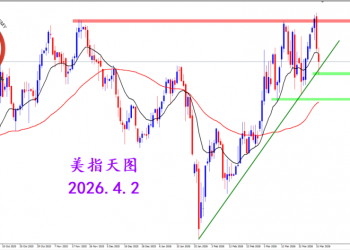 2026.4.2 图文交易计划:美指反复拉扯 交易349 人气#黄金外汇论坛
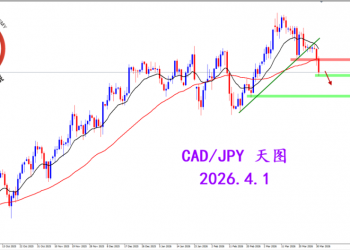 2026.4.1 图文交易计划:加日再度走弱 方向326 人气#黄金外汇论坛
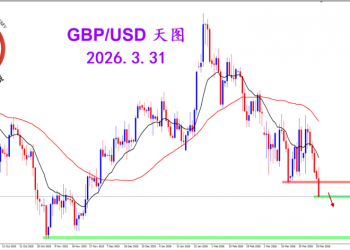 2026.3.31 图文交易计划:镑美坚决下跌 打438 人气#黄金外汇论坛
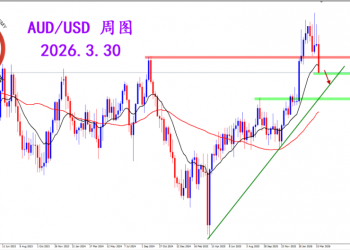 2026.3.30 图文交易计划:维系空头格局 澳962 人气#黄金外汇论坛



 显身卡
显身卡


 微信微信
微信微信 官方微博
官方微博